JLPT N5 Food & Home Vocabulary: Learn It from the Scenes Around You
TL;DR: The two richest N5 scenes are the ones you're in every day: meals and your home. Together they cover about 75 high-frequency N5 words — plus the verbs and adjectives that make them usable in sentences. Below are both scene lists with kana and romaji, and the photo-first way to learn them without typing a single card.
Why learn N5 vocabulary by scene?
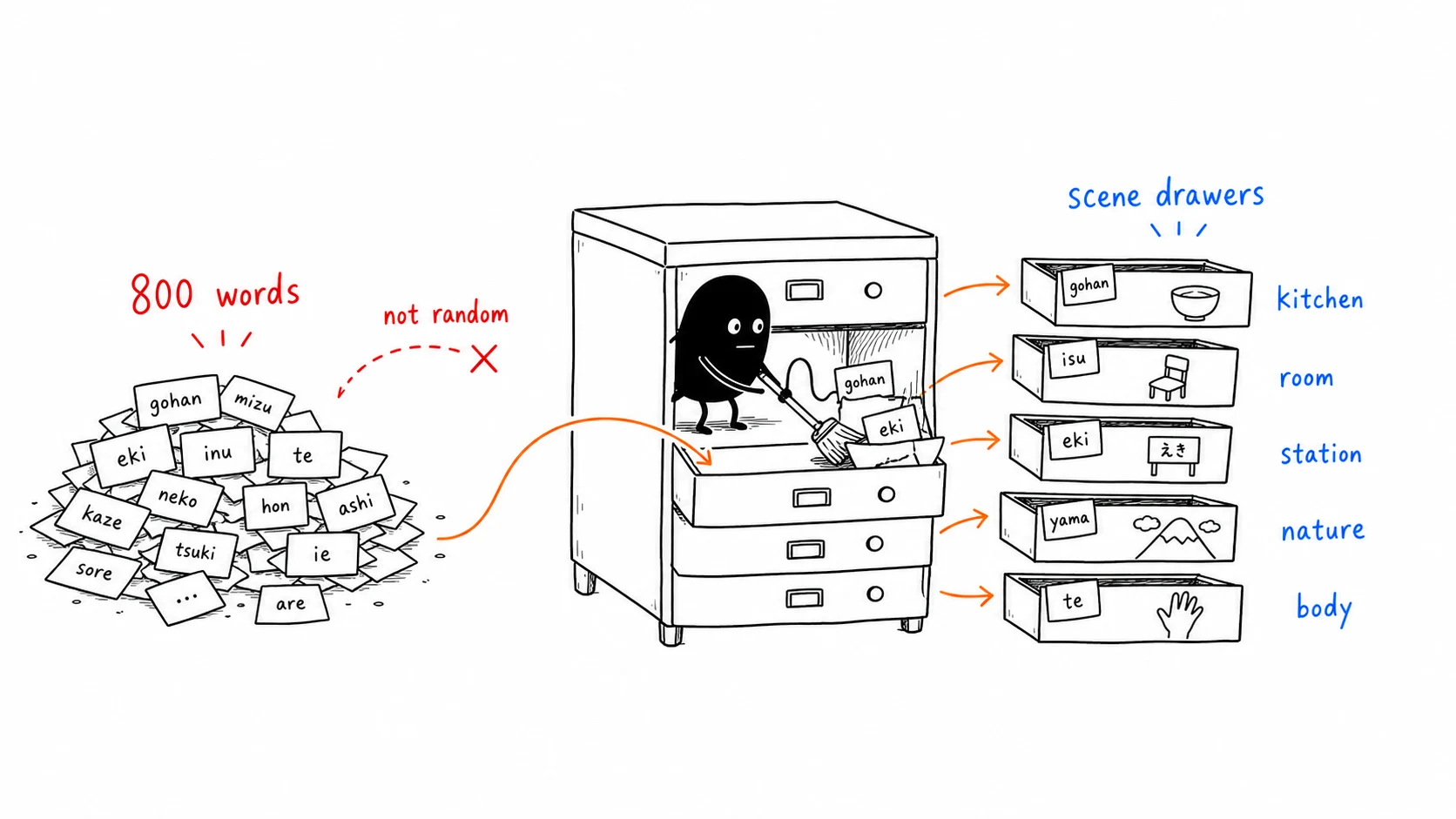
Alphabetical lists put ame (rain) next to ani (older brother) — words that share nothing but a sound. Scenes group words the way the exam (and Japan) actually presents them: a menu, a kitchen, a room. You recall them together because you met them together. The full N5 guide covers all six scene categories and the science; this page goes deep on the two scenes with the highest word density.
Scene 1: Food & meals — 37 words
Everything here appears at your own table. Nouns first, then the verbs and adjectives that N5 pairs them with:
| Word | Kana | Romaji | English |
|---|---|---|---|
| 食べ物 | たべもの | tabemono | food |
| 飲み物 | のみもの | nomimono | drink |
| 料理 | りょうり | ryouri | cooking; dish |
| 台所 | だいどころ | daidokoro | kitchen |
| ご飯 | ごはん | gohan | rice; meal |
| 朝ご飯 | あさごはん | asagohan | breakfast |
| 昼ご飯 | ひるごはん | hirugohan | lunch |
| 晩ご飯 | ばんごはん | bangohan | dinner |
| お弁当 | おべんとう | obentou | boxed lunch |
| パン | パン | pan | bread |
| 卵 | たまご | tamago | egg |
| 魚 | さかな | sakana | fish |
| 肉 | にく | niku | meat |
| 野菜 | やさい | yasai | vegetables |
| 果物 | くだもの | kudamono | fruit |
| りんご | りんご | ringo | apple |
| 水 | みず | mizu | water |
| お茶 | おちゃ | ocha | tea |
| コーヒー | コーヒー | koohii | coffee |
| お皿 | おさら | osara | plate |
| コップ | コップ | koppu | glass; cup |
| 箸 | はし | hashi | chopsticks |
| スプーン | スプーン | supuun | spoon |
| フォーク | フォーク | fooku | fork |
| ナイフ | ナイフ | naifu | knife |
| 食べます | たべます | tabemasu | to eat |
| 飲みます | のみます | nomimasu | to drink |
| 作ります | つくります | tsukurimasu | to make |
| 買います | かいます | kaimasu | to buy |
| 切ります | きります | kirimasu | to cut |
| 洗います | あらいます | araimasu | to wash |
| おいしい | おいしい | oishii | delicious |
| 甘い | あまい | amai | sweet |
| 辛い | からい | karai | spicy; hot |
| 高い | たかい | takai | expensive; high |
| 安い | やすい | yasui | cheap |
| 冷たい | つめたい | tsumetai | cold (to the touch) |
Photograph this scene: your next breakfast covers a third of the table above in one shot — gohan, tamago, ocha, osara, hashi. Say each word out loud while you can still see the object, then let the review schedule do the rest. The nouns here overlap with the main N5 list by design — same source, extended with the tableware, verbs, and adjectives the exam pairs with them.
Scene 2: Home & your room — 39 words
One slow lap around your home touches every noun on this list:
| Word | Kana | Romaji | English |
|---|---|---|---|
| 部屋 | へや | heya | room |
| ドア | ドア | doa | door |
| 窓 | まど | mado | window |
| 机 | つくえ | tsukue | desk |
| 椅子 | いす | isu | chair |
| ベッド | ベッド | beddo | bed |
| 布団 | ふとん | futon | futon; bedding |
| 本 | ほん | hon | book |
| 電話 | でんわ | denwa | telephone |
| テレビ | テレビ | terebi | television |
| ラジオ | ラジオ | rajio | radio |
| 時計 | とけい | tokei | clock; watch |
| 鍵 | かぎ | kagi | key |
| 電気 | でんき | denki | light; electricity |
| お風呂 | おふろ | ofuro | bath |
| シャワー | シャワー | shawaa | shower |
| 写真 | しゃしん | shashin | photograph |
| 新聞 | しんぶん | shinbun | newspaper |
| 雑誌 | ざっし | zasshi | magazine |
| 辞書 | じしょ | jisho | dictionary |
| ノート | ノート | nooto | notebook |
| 箱 | はこ | hako | box |
| 花瓶 | かびん | kabin | vase |
| ストーブ | ストーブ | sutoobu | heater; stove |
| 服 | ふく | fuku | clothes |
| 靴 | くつ | kutsu | shoes |
| 開けます | あけます | akemasu | to open |
| 閉めます | しめます | shimemasu | to close |
| 置きます | おきます | okimasu | to put; to place |
| 起きます | おきます | okimasu | to get up |
| 寝ます | ねます | nemasu | to sleep |
| 見ます | みます | mimasu | to see; to watch |
| 入ります | はいります | hairimasu | to enter; to take (a bath) |
| 大きい | おおきい | ookii | big |
| 小さい | ちいさい | chiisai | small |
| 新しい | あたらしい | atarashii | new |
| 古い | ふるい | furui | old |
| 明るい | あかるい | akarui | bright |
| 暗い | くらい | kurai | dark |
Note the trap pair: 置きます (to put) and 起きます (to get up) are both okimasu. Context — and the kanji — tell them apart, which is exactly why words learned inside scenes stick better than words learned as bare sounds.
Photograph this scene: shoot your desk, not the whole room. A tight frame with five or six objects (tsukue, hon, nooto, denki, tokei) beats a wide shot of twenty — you'll actually finish reviewing it.
Point at lunch. Get N5 cards. With KaChiKa JA, the words in your photo become cards in about 5 seconds — example sentence, short dialogue, and pronunciation included — and it skips the words you already know.
How to turn a scene into memory (3 steps)
- Shoot small. One meal, one desk, one shelf. Aim for 5–10 unknown words per photo — that's a review load you'll still be clearing happily next week.
- Select only what you couldn't name. If you already know terebi, don't card it. The point of scene study is that most of the scene is soon known — new photos then yield only genuinely new words.
- Review the next day, out loud. Recall the word before flipping — the photo is the cue, the retrieval is the workout. Ten minutes daily follows the same rhythm as the 8-week N5 plan.
Prefer a fixed list to start? The 120-word N5 starter pack (CSV) covers all six categories and imports into any flashcard app.
Beyond food and home
The same method extends to the other N5 scenes — stations and shops on your commute (eki, ginkou, suupaa), weather out the window (ame, sora, tenki), people around your table (kazoku, tomodachi). The full six-category list has all of them with kana and romaji.
Start with the scene in front of you: photograph today's lunch and let KaChiKa JA build your first N5 cards — free to start on iOS and Android.
Related: JLPT N5 vocabulary list & 8-week plan · How to choose an N5 Anki deck · Spaced repetition: SM-2 vs FSRS
FAQ
How many food words are on the JLPT N5?
There is no official JLPT list, but common N5 lists include roughly 30–40 food and drink words — meals, ingredients, tableware — plus the verbs used with them, like tabemasu (eat) and nomimasu (drink). The table on this page covers that high-frequency core.
Do I need verbs and adjectives for N5, or just nouns?
You need both. N5 tests basic verbs (eat, drink, open, sleep) and i-adjectives (oishii, ookii, atarashii) heavily in both reading and listening. The most reliable way to keep them is to attach each one to a scene — a verb learned with your own breakfast is harder to forget than one from an abstract list.
What is the best way to memorize Japanese household vocabulary?
Attach each word to the actual object in your home rather than a printed list. Walk one room at a time, photograph it, and study only the words you couldn't name. The picture superiority effect makes the object itself the memory cue, and spaced repetition keeps the word from fading.